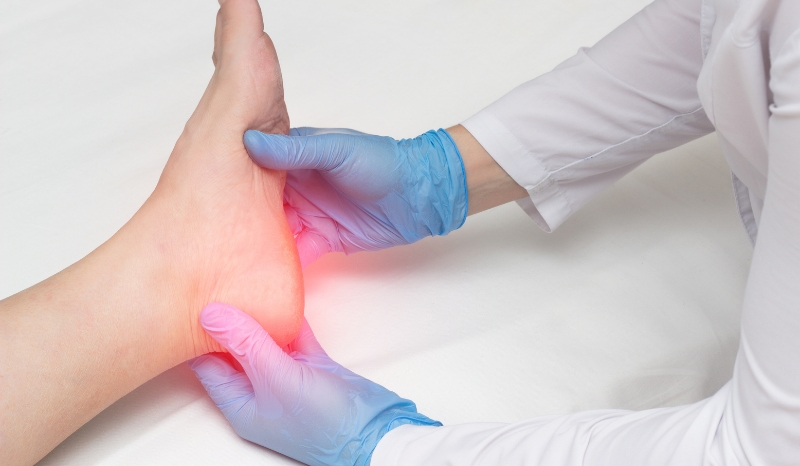
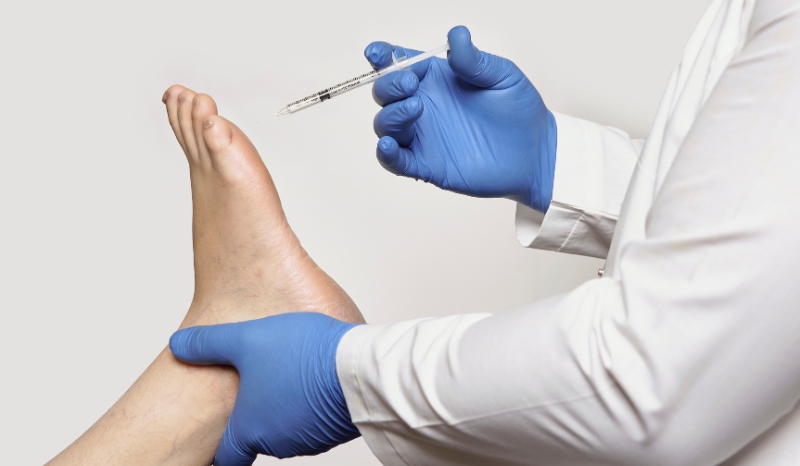
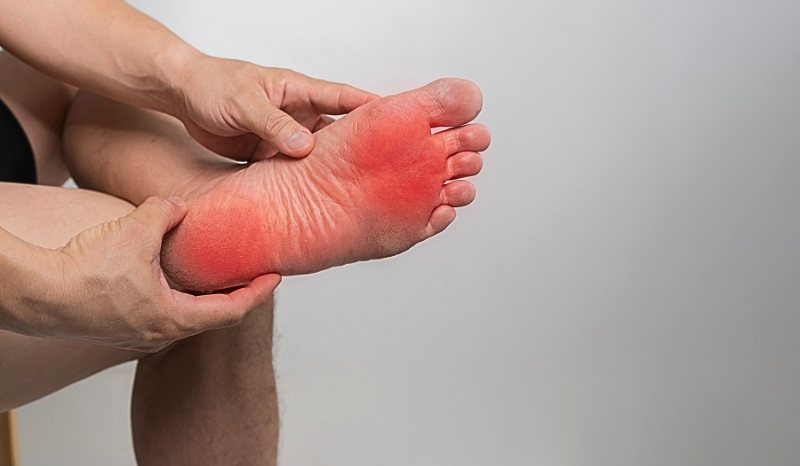
The plantar fascia is the connective tissue made up of tendons and ligaments that supports the arch of the foot. Plantar fasciitis is a disorder of the insertion site of the ligament. Often the patients have a breakdown of this connective tissue.It results in pain in the heel and bottom of the foot that is usually most severe in the morning when you take your first steps. The cause of plantar fasciitis is not entirely clear, and it is often difficult to treat. Oral anti-inflammatories and steroid injections are often helpful. PRP and other regenerative medicine injections can all be utilized to treat this pain.
Recognizing the Signs of Heel and Arch Degeneration



Plantar fasciitis goes beyond simple inflammation; it involves structural deterioration and micro-tearing at the critical junction where your plantar fascia anchors to the heel bone. We break down the clinical realities of this condition to help you understand the root cause of your foot pain.

Repeated mechanical stress leading to microscopic tears and chronic breakdown in the fascial tissue.

Flat feet, abnormally high arches, or irregular walking patterns that exponentially increase ligament tension.

Utilizing high-resolution imaging to accurately measure fascia thickness and pinpoint exact zones of degeneration.

Deploying targeted orthobiologics to stimulate the body's natural tissue repair and rebuild compromised ligaments.



Expert Tip: Avoid walking barefoot on hard surfaces, especially first thing in the morning, to prevent aggressive stretching of the already compromised fascia. Keep supportive, cushioned footwear immediately next to your bed so you can step directly into them upon waking.

Primary Focus
Recovery Time
Invasiveness
Target Area
Care Setting
Tissue Repair
Minimal
Ultra Low
Root Cause
Same Day
Pain Masking
Extended
High
Symptoms Only
Multi-Visit